Flowers That Mean Good Luck

People have trusted flowers to carry wishes for centuries: health for a patient, success for a graduate, prosperity for a new business. Some flowers and plants became so closely tied to good fortune that their names alone are a blessing. This guide covers the flowers that mean good luck and the best-known lucky plants, where their reputation comes from and which one suits which occasion.
Most flowers that mean good luck are easy to give as a bouquet or a potted plant, so you can match the gift both to the person and to the kind of luck you want to wish them.
Which Flower Is the Luckiest?
There is no single answer, because luck means different things in different cultures. The most widely recognized lucky flower names are the peony for wealth and honor, the orchid for refinement and prosperity, the chrysanthemum for long life, the marigold for auspicious beginnings the four-leaf clover for pure chance, and yellow roses for warm good wishes. Among plants, lucky bamboo, the jade plant and the money tree are the classic good luck gifts for homes and offices.
Lucky Bamboo (Dracaena Sanderiana)

Despite its name, lucky bamboo is not bamboo but a dracaena that grows happily in water. In feng shui the number of stalks carries the message: two for love, three for happiness and long life, five for health, eight for wealth and nine for great fortune. Four stalks are avoided, because the word for four sounds like the word for death in Chinese.
Jade Plant (Crassula Ovata)

The jade plant comes from South Africa and has thick, round leaves that resemble coins, which is why it is called the money plant in many countries. It can live for decades, so it symbolizes lasting prosperity, and it is traditionally kept by the front door of a home or shop to welcome wealth.
Money Tree (Epipremnum Aureum)

The name money plant covers two different plants. In India and much of South Asia it refers to pothos (Epipremnum aureum), a trailing vine said to bring financial luck. The braided money tree popular in offices is Pachira aquatica, whose braided-trunk style became popular in Taiwan in the 1980s. Both are given to wish prosperity and are almost impossible to kill.
Peonies

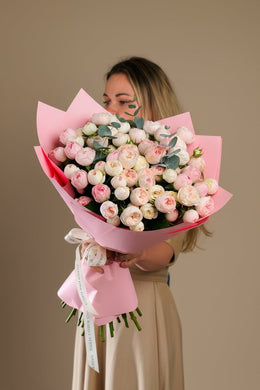
In China the peony is called the king of flowers and stands for wealth, honor and a happy marriage. It is a traditional gift for weddings and business openings, and a bouquet of pink peonies is one of the most generous ways to wish someone prosperity. See our peony meaning guide or our peony bouquets.
Chrysanthemums

Chrysanthemums originated in East Asia, where they symbolize longevity and good fortune; in Japan the flower is the emblem of the imperial family. Bright yellow and gold chrysanthemums are given to wish long life, especially to elders. More in our chrysanthemum meaning guide, or browse chrysanthemum bouquets.
Hydrangea

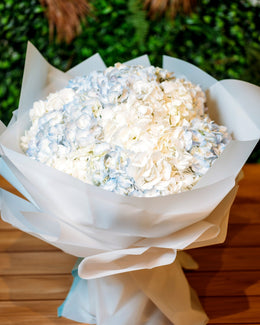
Hydrangeas represent gratitude, abundance and heartfelt emotion, and their full, round flower heads have long been read as a sign of plenty. They pair beautifully with other lucky flowers in a celebratory bouquet. See our hydrangea bouquets.
Marigolds

Marigolds are among the most auspicious flowers in India, where orange and yellow garlands decorate weddings, temples and Diwali celebrations. Their sunny petals are believed to bring good fortune and to protect a home from negative energy.
Orchid

Orchids were prized in ancient China as a symbol of refinement and integrity, and in feng shui they attract prosperity and harmonious relationships. A potted orchid is one of the most popular gifts for a new office, because it stays in bloom for weeks. More in our orchid meaning guide.
Azaleas

Azaleas burst into bright bloom in spring, and in Chinese culture they are linked with homecoming and womanhood. They bring cheerful energy and are a popular gift in pots. Note that azaleas are toxic to pets, so they are not a good choice for a home with cats or dogs.
Carnations

Carnations were woven into garlands as far back as Roman times and are still associated with good luck, especially white ones, which wish someone well at the start of something new. They also outlast most other cut flowers in the vase. See our carnation bouquets.
Jasmine

Jasmine has been a symbol of good fortune in India and China for centuries. Arabian jasmine, Jasminum sambac, is woven into wedding garlands in South Asia and is the national flower of the Philippines, and its sweet scent is a familiar note in Gulf perfumes.
Plum Blossoms

Plum blossoms flower in late winter, often while snow is still on the ground, so in China and Japan they stand for perseverance and hope. Together with pine and bamboo they form the Three Friends of Winter, and their five petals are often said to represent five blessings.
Snake Plant (Dracaena trifasciata Plant)

The snake plant is famously tough: it tolerates low light, dry air and irregular watering. In feng shui its upright, sword-like leaves are believed to offer protection and strength, which makes it a practical good luck gift for a busy office.
Lotus

The lotus grows from muddy water into a spotless flower, so in Buddhism and Hinduism it symbolizes purity, enlightenment and good fortune that rises above difficulty. It is also the national flower of Vietnam.
Sunflower (Helianthus Annuus)

Sunflowers turn toward the sun as they grow, which is why they symbolize loyalty, optimism and good luck. In China they are associated with long life. A sunflower bouquet is a cheerful good luck gift for a new job, an exam or a move. See our sunflower bouquets.
Four-Leaf Clover (Trifolium Repens)

The four-leaf clover is the best-known symbol of luck in the Western world because it is so rare: most estimates put it at about one in several thousand clovers. In Irish tradition the four leaves stand for faith, hope, love and luck.
Lavender (Lavandula)

Lavender has long been used to protect homes and calm the mind. In England, brides once tucked lavender into their bouquets for good luck and a happy marriage, and dried lavender sachets are still given as small tokens of good fortune.
Daffodil (Narcissus)

Daffodils announce the end of winter, so they stand for renewal and new beginnings. Welsh folklore says that spotting the first daffodil of spring brings more gold than silver in the year ahead, and in China a blooming narcissus at Lunar New Year promises good fortune.
Rosemary (Rosmarinus Officinalis)

Rosemary is an herb rather than a showy flower, but its small blue blossoms carry a long tradition of luck. Sprigs were hung over doorways for protection, and brides in Europe wore rosemary for fidelity and good fortune. It is also the herb of remembrance, so a rosemary plant makes a thoughtful gift for someone setting out on a new path.
Lucky Flowers in the UAE: What to Give and When
In Dubai, good luck flowers are given most often for business openings, new homes, new jobs and exams. Because the city brings together so many traditions, it helps to match the flower to the recipient: peonies and orchids are understood as prosperity flowers by Chinese and many Gulf families, marigolds and jasmine carry auspicious meaning for Indian families, and sunflowers read as good luck almost everywhere.
| Occasion | Lucky flowers | Where to start |
|---|---|---|
| Business or office opening | Peonies, orchids | Peony bouquets |
| New job or promotion | Sunflowers, purple flowers | Sunflower bouquets |
| Graduation or exams | Sunflowers, yellow carnations | Graduation flowers |
| New home | Hydrangeas, chrysanthemums | Hydrangea bouquets |
Whatever you choose, add a short card. "Wishing you luck in everything that comes next" turns any bouquet into a good luck gift.
Good Luck Flowers FAQ
What flower means good luck?
Peonies, orchids, chrysanthemums, marigolds and sunflowers are the best-known good luck flowers. Among plants, lucky bamboo, the jade plant and the money tree are the classic choices.
Which flowers mean good luck and prosperity?
Peonies are the strongest symbol of wealth and honor, especially in Chinese culture, and orchids and jade plants are also associated with prosperity.
What is a good luck flower for a business opening?
A peony bouquet or a potted orchid is a classic choice. Both symbolize prosperity, and an orchid stays in bloom for weeks in an office.
How many stalks of lucky bamboo should I give?
Three for happiness and long life, eight for wealth or nine for great fortune. Avoid four, which is considered unlucky in Chinese culture.
Lovely bouquets
View Collection